
Chatbot Design
Of all the projects here this is the one closest to my heart, if for no other reason than it opened my eyes to how fascinating UX design could be.
Featured Project
Background:
Build a book boyfriend (BeBe) Chatbot
This started as a Hail Mary play to break through the noise of the modern book publishing world. Romance readers are on Facebook, I was looking for a way to automate my marketing, luckily, Facebook opened Messenger to chatbots. Who knew it would turn out to be something I loved!
The way this was envisioned was that users would interact with the bot and find their ideal book boyfriend through a series of questions. Once they had chosen their favorite, the bot would send them periodic “love notes” from their choice. The love notes would be written by authors from the point of view of the hero of their book, and would contain a link to purchase the book.
Execution:
Chatfuel and The database
BeBe was built through Chatfuel. Their system handled all of the AI this way I could focus on choosing the right module and asking the right questions at the right time. Theirs is a plug and play system that reminded me of the simple Basic coding we did in high school. If you can understand the complexities of an If/ Then/ Else statement the rest is easy.
BeBe, and all chatbots really, basically function as keyword search engines. They search a database for those keywords and return that information to the user. In my case I had to create a database as opposed to connecting to an already established one. The questions narrow the possible keywords to something the bot can make sense of.
I also created a database of words that were not allowed. If the user typed one of those then BeBe would scold them and close.
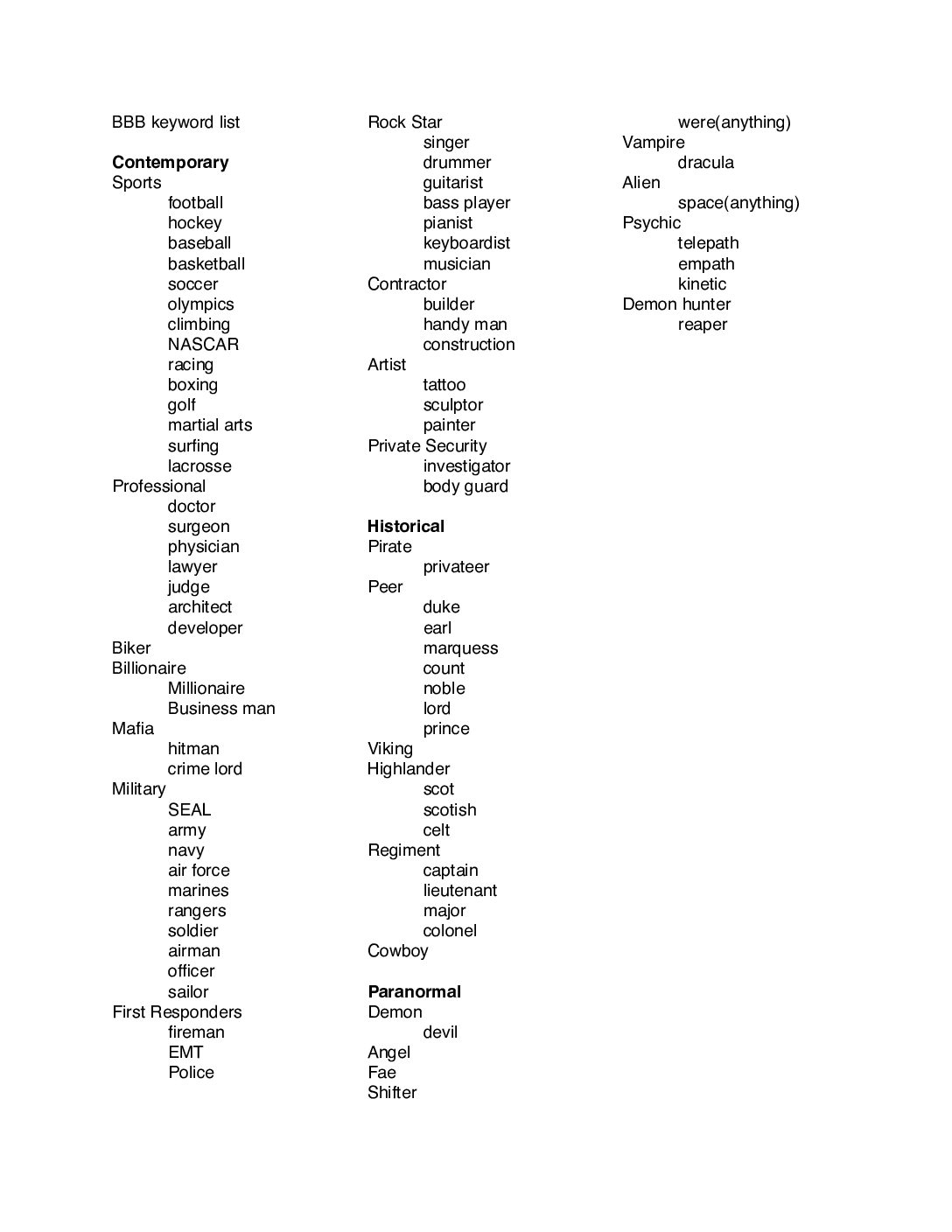
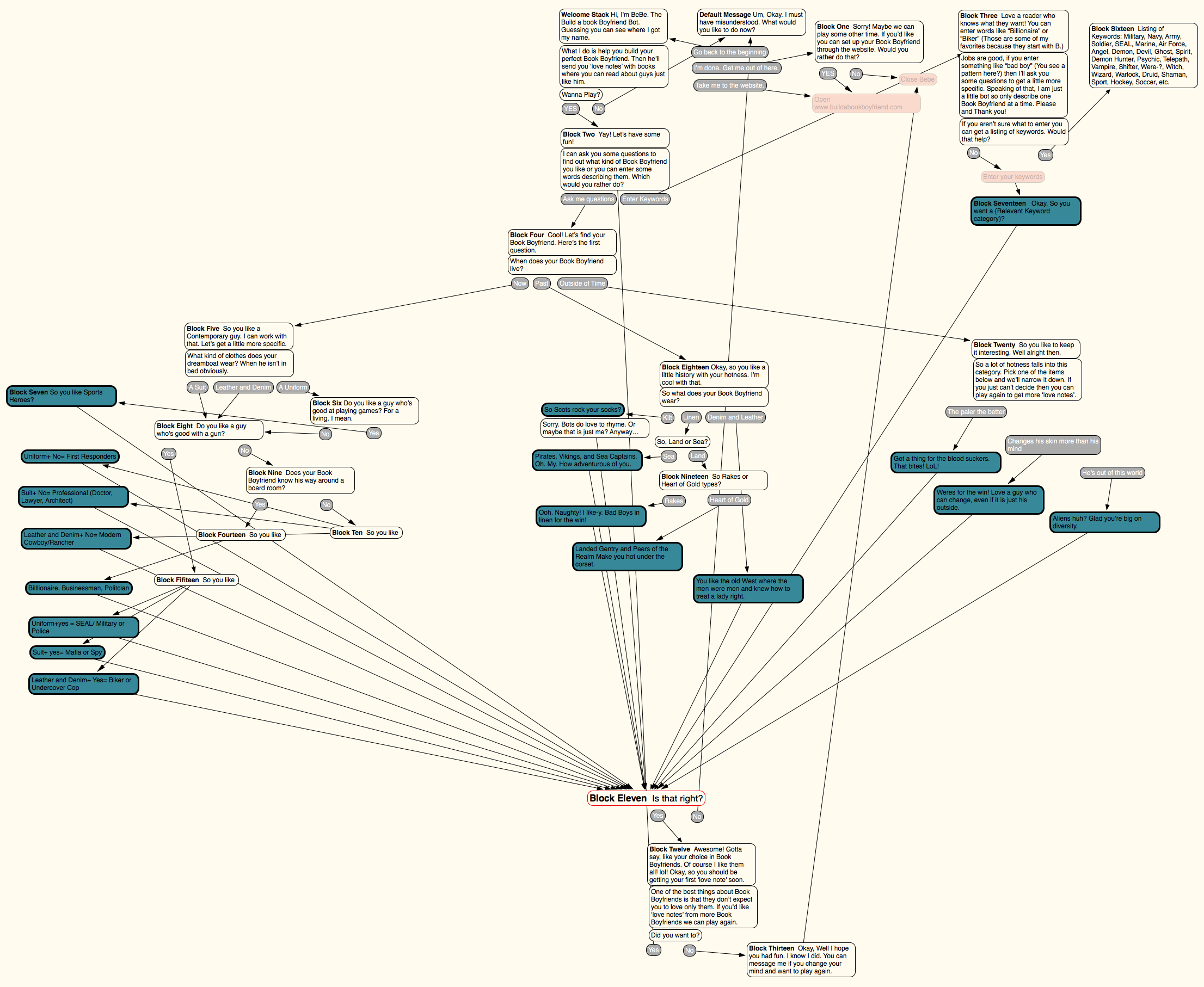
In practice, that list became this schematic. Clicking on the image will open an expandable version in a new tab.
Everyone starts the same way(Welcome block at the top). What is not shown on here, is the onboarding process where the user can sign up and choose the frequency they would like to be contacted.
I opted to start by breaking down romance subgenres into time periods. The reader who likes cowboy heroes could only read old West types or only modern rancher stories. For those that don’t discriminate, there is an invitation at the end to play again to get more notes.
Lessons learned: The audience you design for isn’t always the audience you get
BeBe was the belle of the ball for a while, unfortunately her popularity had some unintended consequences. I had neglected to think about the world wide nature of Facebook. Within a few months, BeBe started getting deluged with notes from teen girls often from overseas looking for American boyfriends. As the mother of a daughter I responded to the first few, that trying to meet strange men online was not safe. When I was receiving hundreds a day I felt I had to close BeBe down. Still a fantastic learning experience but definitely not the outcome I was expecting.
It taught me that you don’t only need to design for your intended audience, in this case romance readers, but for a possible unintended audience. I was trying to make the heroes come to life in the eyes of readers, I succeeded but that created its own problems. BeBe was also created fairly early in the opening of Messenger to chatbots, at that point the early adopters were younger than the market I was trying to attract.
Still the task was fascinating and led me to explore user interaction/ experience design in more detail.